Wednesday, 5 March 2014
MurciaGuides Advanced English Practice Materials for Tour Guides : Introduction to Cartagena - Video listening & read...
MurciaGuides Advanced English Practice Materials for Tour Guides : Introduction to Cartagena - Video listening & read...: Watch this video on Cartagena and do the fill-in-the-gaps exercise The Mediterranean city of Cartagena is characterised by the variety o...

Tuesday, 18 February 2014

Wednesday, 8 January 2014
Future tenses exercise
Happy new usar to all of you!This is time for new year's resolutions. So I think that a future tense exercise will fit perfectly well on these days.
Future Tense – Cumulative Review
Choose the correct form of the verb in any aspect of the future tense.
Carrie has been training her dog, Jack, for competition for the past six months. Carrie is Jack’s “handler,” and together they are a team. If Jack is ready, Carrie (take) _______ ______(1) him to a rally in a nearby city this coming September. Carrie imagines the upcoming rally. She has many questions about it. She decides to ask one of her friends, Jessica, about it.
“What _______ (2) I (do) ______ ________ (3) at the rally, exactly?” she asks. “You (compete) _______ _____ ________ (4) against other teams as they complete a course of challenging exercises,” Jessica tells her. “The exercises at the rally (involve) _______ _______ _____ _______ (5) giving commands, jumping, pivoting, spiraling, side stepping, and dropping. Each exercise (be) ____ _______ ____ ____ (6) numbered. As they are doing the exercises together, the handlers (talk) _______ _____ ________ (7) to their dogs.”
“Before beginning the course,” Jessica continues, “Each team (receive) _______ _______
8) 200 points. Each time a team makes a mistake, a point is deducted by the judge. At the end of the course, the handlers (probably, praise) _______ ________ _______ (9) their dogs and give them food as rewards. The teams (do) _______ _______ _______ (10) their best together, and therefore will deserve a rest. By the time the dogs finish eating, the judge (tally) _______ _______ _________ (11) each team’s final score.”
“The dogs at the rally will not only be purebred. Lots of mixed-breed dogs (surely, participate) ______ _______ _____ ________ (12) in the rally, too. There is no age limit for the dogs, either, and it has been decided that all future rallies (include) _____ _______ _____ _______ (13) a division for handlers ages 8 to 18. This way, kids can get more involved.”
Carrie is 19 years old, and Jack is 10. He is a Labrador mix. If they go to the rally, they (enter) _______ ________ (14) the Level 1 competition, because it (be) _______ ____ (15) their first rally. Rallies also include Levels 2 and 3. 3 is the highest level.
Carrie has a plan. She says that she (decide) ______ _______ _____ ________ (16) by July 4th whether Jack is ready to compete. By then, she (train) _______ _______ _______ ________ (17) him for eight months. She hopes they (win) ______ ______ (18) a blue ribbon!
Exercise key 1) will take 2) will 3) be doing 4) will be competing 5) are going to involve 6) is going to be 7) will be talking 8) will receive 9) will probably praise 10) will have done 11) will have tallied 12) will surely be participating 13) are going to include 14) will enter 15) will be 16) is going to decide 17) will have trained 18) will win

Wednesday, 18 December 2013
A short story by Alice Munro, Nobel Prize winner 2013
This is a reading challenge for you, students of intermediate level. If you like good literature, in spite of the effort, you surely will enjoy this superb writer.
Alice Ann Munro (born 10 July 1931) is a Canadian author writing in English. Munro's work has been described as having revolutionized the architecture of short stories, especially in its tendency to move forward and backward in time. Her stories embed more than announce, reveal more than parade.
Munro's fiction is most often set in her native Huron County in southwestern Ontario.Her stories explore human complexities in an uncomplicated prose style. Munro's writing has established her as "one of our greatest contemporary writers of fiction," or, as Cynthia Ozick put it, "our Chekhov." Awarded the 2013 Nobel Prize in Literature for her work as "master of the modern short story", and the 2009 Man Booker International Prize for her lifetime body of work, she is also a three-time winner of Canada's Governor General's Award for fiction.

Saturday, 30 November 2013
An easy way to heat a room and save in your electricity bill
You will only need 4 candles and 2 plant pots

Tuesday, 26 November 2013
Movie posters of Film noir
Just superb! If you like cinema I am sure you will find this page simply fascinating.
http://wheredangerlives.blogspot.com.es/2011/05/100-greatest-posters-of-film-noir.html

Sunday, 17 November 2013
George Gershwin, 1898-1937 PART II (adapted from VOA web)
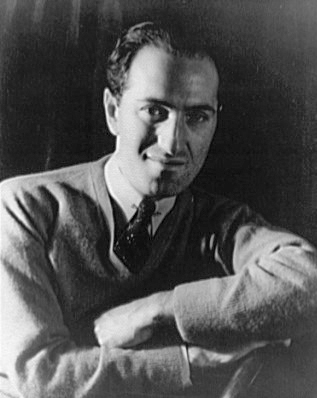 George Gershwin, 1898-1937: One of America’s Greatest Composers
PART II
VOICE ONE: I'm Barbara Klein.
VOICE TWO:
And I'm Steve Ember with PEOPLE IN AMERICA in VOA Special English. Today we continue our ___________ about the life and music of one of America's greatest composers, George Gershwin.
(MUSIC: "Rhapsody in Blue")
VOICE ONE:
As we reported last week, George Gershwin published his first song when he was just eighteen years old. During the next twenty years, until his death, he wrote more _ __________ five hundred more songs. He also wrote an opera, and music for piano and orchestra..
Many of George Gershwin's songs ___________ first written for musical plays performed in theaters in New York City. These comedies, with plenty of songs, were a popular form of entertainment in the nineteen twenties and nineteen thirties..
One of Gershwin's musical plays, "Girl Crazy," introduced a young singer named Ethel Merman. She became one of the most celebrated performers in America. In the play, Ethel Merman sang a song George Gershwin wrote just for her. It was called "I Got Rhythm. "
(MUSIC)
VOICE TWO:
Many songs that George Gershwin wrote for musical plays and movies have remained as popular as ever. ___________ the years, they have been sung and played in every possible way -- from jazz to country.
One example is the song, "Someone to Watch Over Me." It was written for the nineteen twenty-six musical "Oh, Kay!" Here is a modern version of the song, sung by Willie Nelson.
(MUSIC)
VOICE ONE:
In the nineteen twenties, there was a debate in the United States about jazz music. Could jazz, some people asked, be considered serious music?
In nineteen twenty-four, jazz musician and orchestra leader Paul Whiteman decided to organize a special concert to show that jazz was serious music. George Gershwin agreed to compose something for the concert before he realized how little time he had to do it. The concert was just a ___________ weeks away. Gershwin got busy. And, in that short time, he composed a piece for piano and orchestra. He called it "Rhapsody in Blue."
VOICE TWO: Gershwin himself played the piano part of "Rhapsody in Blue" at the concert. The audience included some of the greatest classical musicians of the time. When they ___________ his music, they were electrified. It seemed to capture, for the first time, the true voice of modern American culture. Today, we can still hear Gershwin playing "Rhapsody in Blue." An old mechanical piano recording has been reproduced exactly on this recording.
(MUSIC)
A scene from a 1935 production of "Porgy and Bess"
VOICE ONE:
"Rhapsody in Blue" made George Gershwin famous all over the world. Several hundred thousand copies of the printed music ___________ immediately. Gershwin was satisfied that he had shown that jazz music could be both serious and popular. Gershwin also wrote an opera, "Porgy and Bess. " It was based on a book by DuBose Heyward. It is a tragic love story about black Americans along the coast of South Carolina.
"Porgy And Bess" opened in Boston, Massachusetts, in nineteen thirty-five. Audiences loved it. But most critics did not know ___________ to think of it. It was not like any other opera or musical play they had ever seen.
Gershwin was not affected by the critics' opinions. He believed some of his greatest music had gone into the opera. He said he had created a new musical form -- an opera based on popular culture. Here is the song "Summertime" from a later production of "Porgy and Bess" in nineteen fifty-two. Leontyne Price, who played Bess, sings the song.
(MUSIC)
VOICE TWO:
Another well-known Gershwin piece is "An American in Paris. " It is a long tone poem for orchestra. Its first public performance was by the New York Philharmonic Orchestra in nineteen twenty-eight. Here is a modern recording from "An American in Paris."
(MUSIC)
VOICE ONE:
Once again, opinion was mixed. Most people loved "An American in Paris," as they loved all of Gershwin's music. Some critics liked it, too. They called it happy and ___________ of life. Others hated it. They called it silly and long-winded. Still, it remains one of his most popular works.
VOICE TWO:
George Gershwin died in nineteen thirty-seven, just days after doctors learned he had brain cancer. He was only thirty-nine years old. Newspapers all over the world reported his death on their front pages. Everyone mourned the loss of the man and all the music he might have written. George Gershwin is still considered one of America's greatest composers. His works _ __________ are performed by many singers and groups. They are probably performed more often than any other serious American composer.
VOICE ONE:
Austrian composer Arnold Schoenberg was one of the people who praised George Gershwin. Schoenberg said Gershwin was a man who lived in music and expressed everything through music, because music was his native language.
(MUSIC: "Rhapsody in Blue")
VOICE TWO:
This program was written by Shelley Gollust. It was produced by Lawan Davis. I'm Steve Ember.
VOICE ONE:
And I'm Barbara Klein. Join us again next week for PEOPLE IN AMERICA in VOA Special English.
Subscribe to:
Posts (Atom)